
SEMONEMO English Program
Original Reading (ORD)
Guided Reading Lv.1–4 — where reading begins! Built on solid advanced phonics, this program develops reading and literacy together
Enrollment is available after a placement test and an individual consultation.
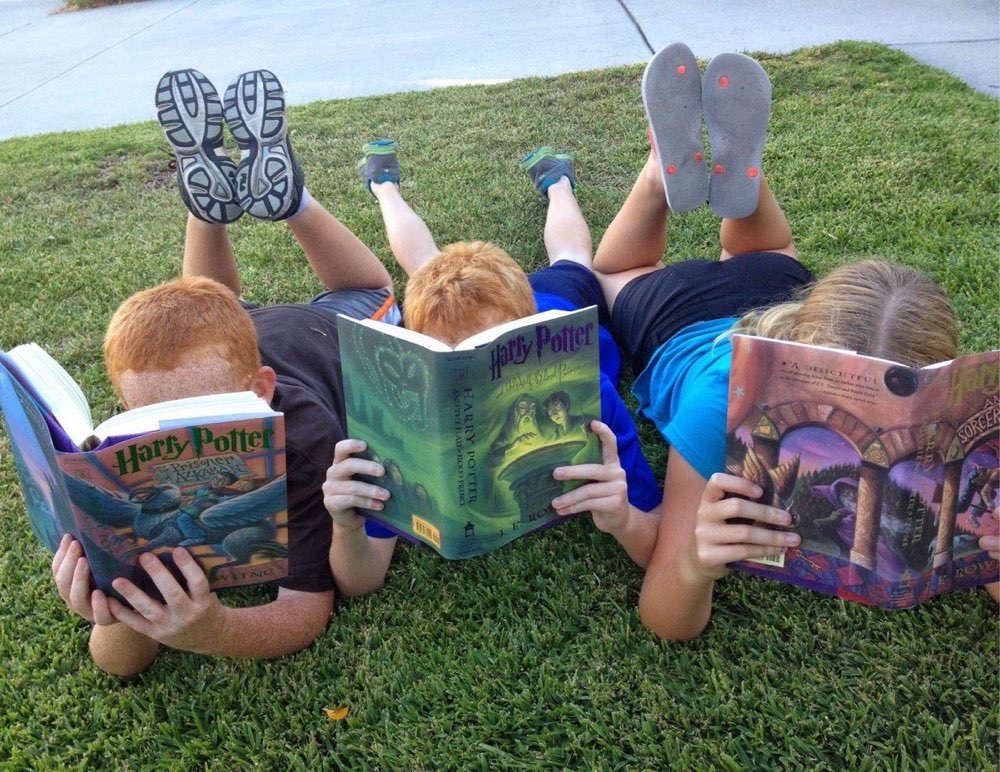
Original Reading Program (ORD)
From the stamina to finish a whole book to the confidence to share ideas in English
The educators who lead our reading program research how students learn most effectively from real books, and they develop a balanced course that moves from step-by-step reading levels and overall comprehension to vocabulary, reading, writing and speaking.
Our reading team focuses on giving each student goals and a curriculum that fit their age and level, so they can enjoy books and experience the fun of learning a new language.
Rather than skimming the surface, the program guides students to analyze the author and characters closely and to understand the historical and social background of each story. Through a variety of related activities, students naturally learn correct sentence structure and English expressions for different situations.
Who It's For
1–8
Grades
Lv.1 – Lv.4
Levels offered · Online classes + individual feedback
consultation based on a level test
Placement
- Age and grade do not determine the class level. Students are placed after a consultation based on their level test results.
Level Guide
Learning stages
reading basic sentences and reviewing phonics
Lv.1 (Beginner)
48 sessions in total
50-minute class + individual feedback
What's included
- Online e-books (Raz-Kids)
- Storytelling
- Dictation
- Shadowing Program
- Three-part worksheets (vocabulary, grammar, comprehension)
- Supplementary book purchased separately
Tuition
- $220 per 4 sessions
understanding and summarizing stories
Lv.2 (Intermediate)
48 sessions in total
60-minute class + individual feedback
What's included
- Online e-books (Raz-Kids)
- Storytelling
- Dictation
- Shadowing Program
- Three-part worksheets (vocabulary, grammar, comprehension)
Tuition
- $230 per 4 sessions
Lv.2W (Intermediate)
48 sessions in total
60-minute class + individual feedback
What's included
- Online e-books (Raz-Kids)
- Storytelling
- Dictation
- Shadowing Program
- Three-part worksheets (vocabulary, grammar, comprehension)
- Supplementary book purchased separately
Tuition
- $230 per 4 sessions
in-depth learning through logical thinking and discussion
Lv.3 (Advanced)
48 sessions in total
60-minute class + individual feedback
What's included
- Online e-books (Raz-Kids)
- Storytelling
- Dictation
- Shadowing Program
- Three-part worksheets (vocabulary, grammar, comprehension)
Tuition
- $230 per 4 sessions
Lv.4 (Advanced)
20 sessions in total
60-minute class + individual feedback
What's included
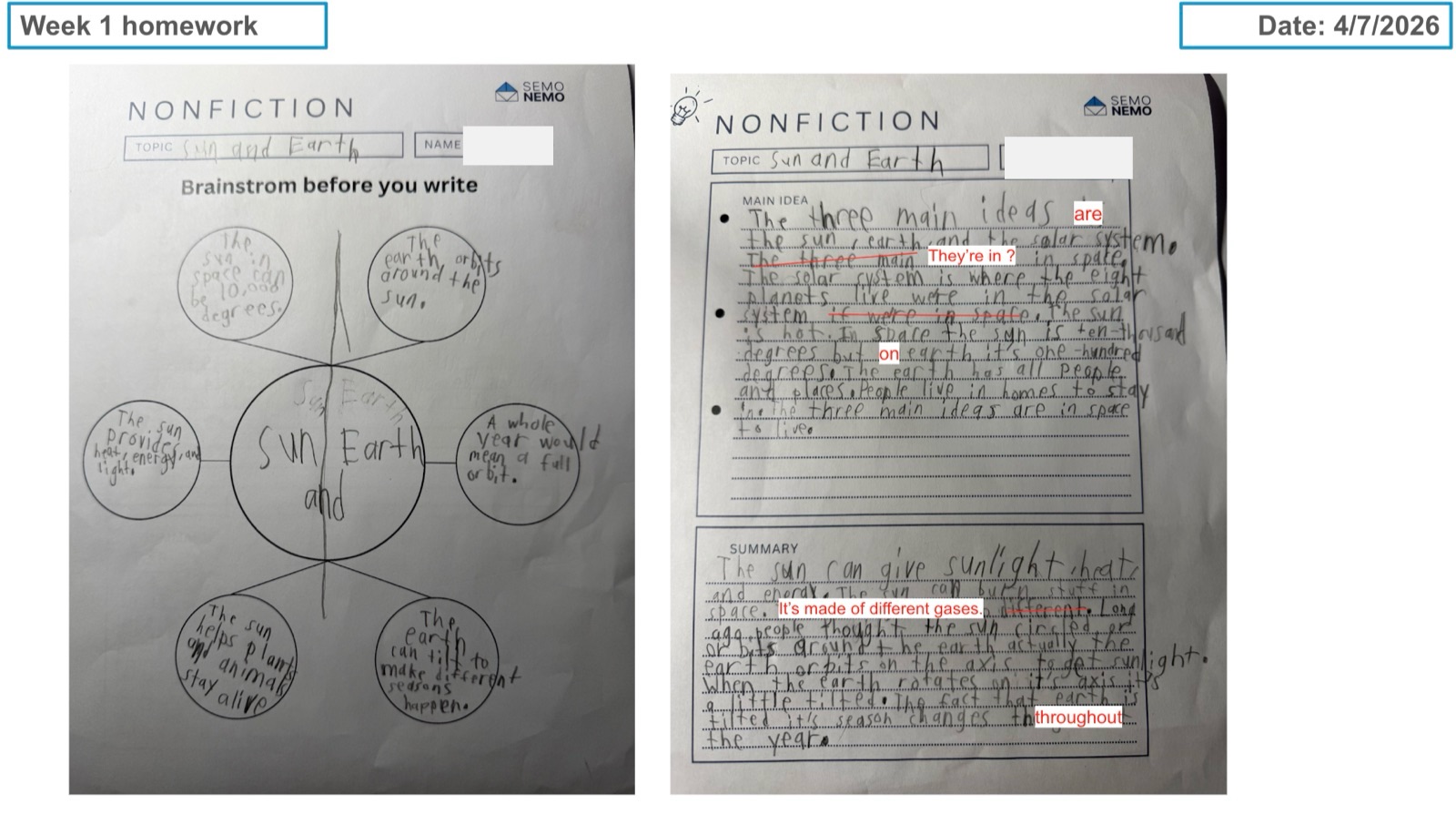
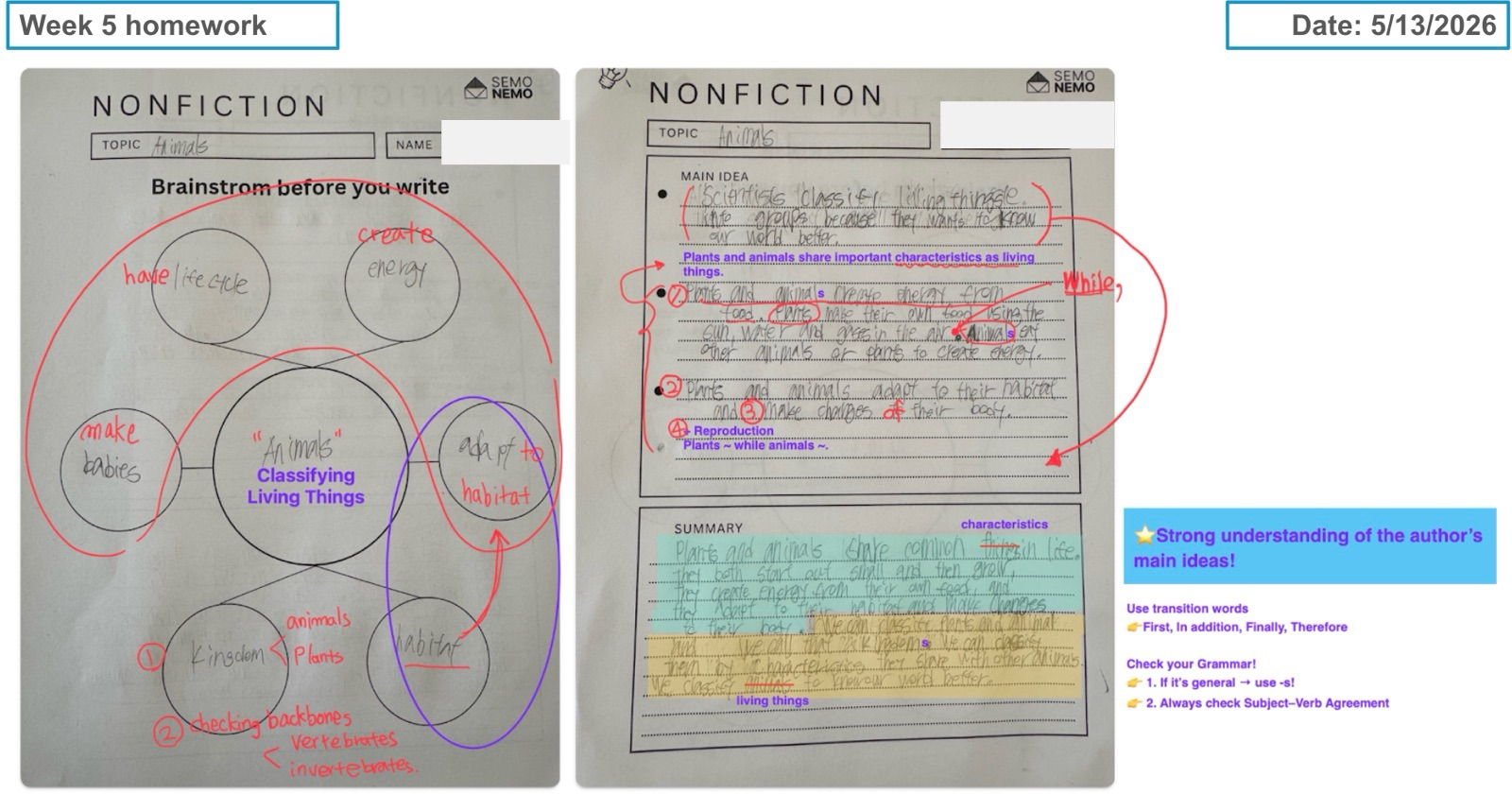
- Nonfiction reading (Space, Animals, Geography)
- Topic-based vocabulary expansion & background knowledge building
- Reading fluency development through Times for Kids shadowing
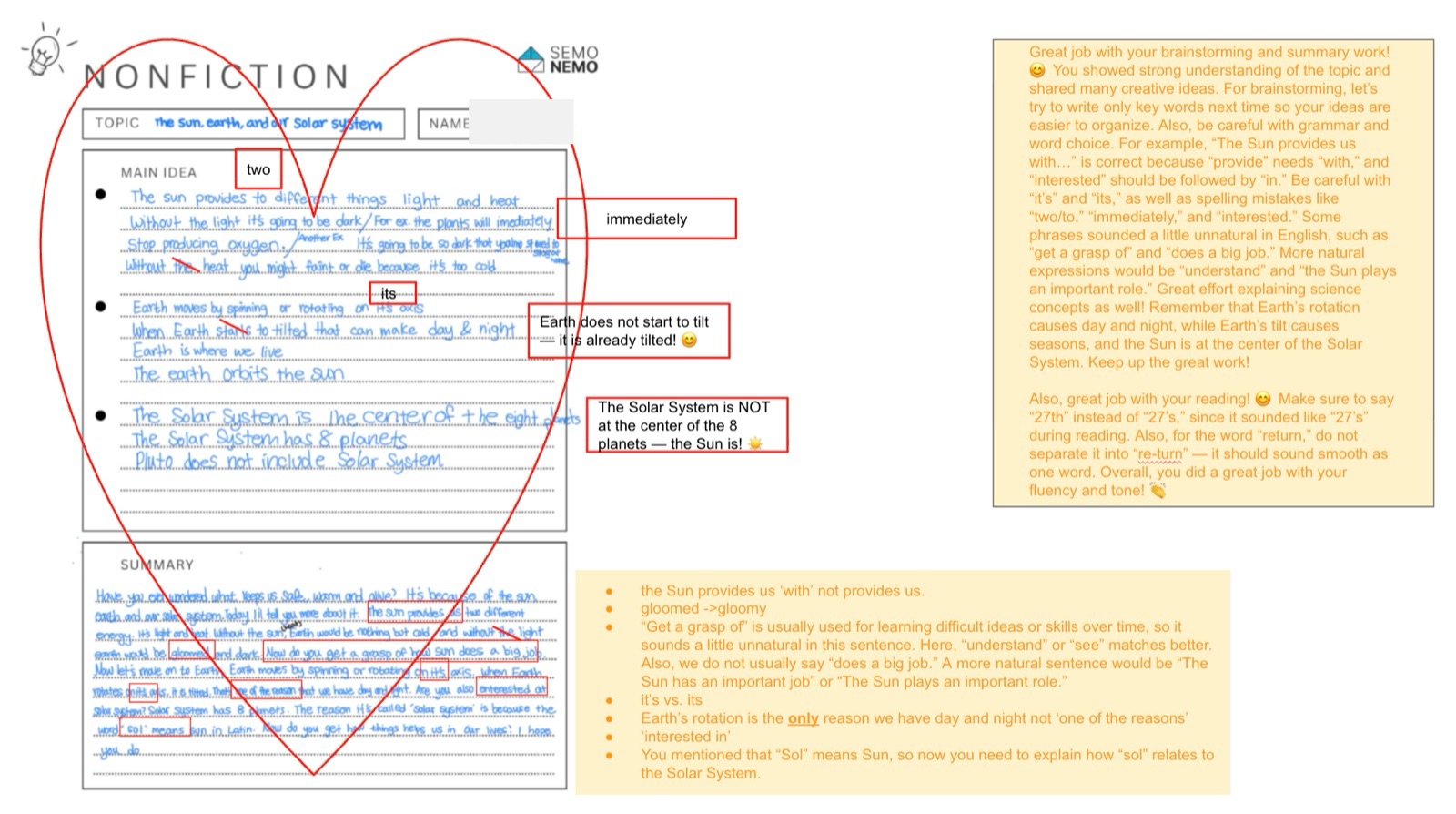
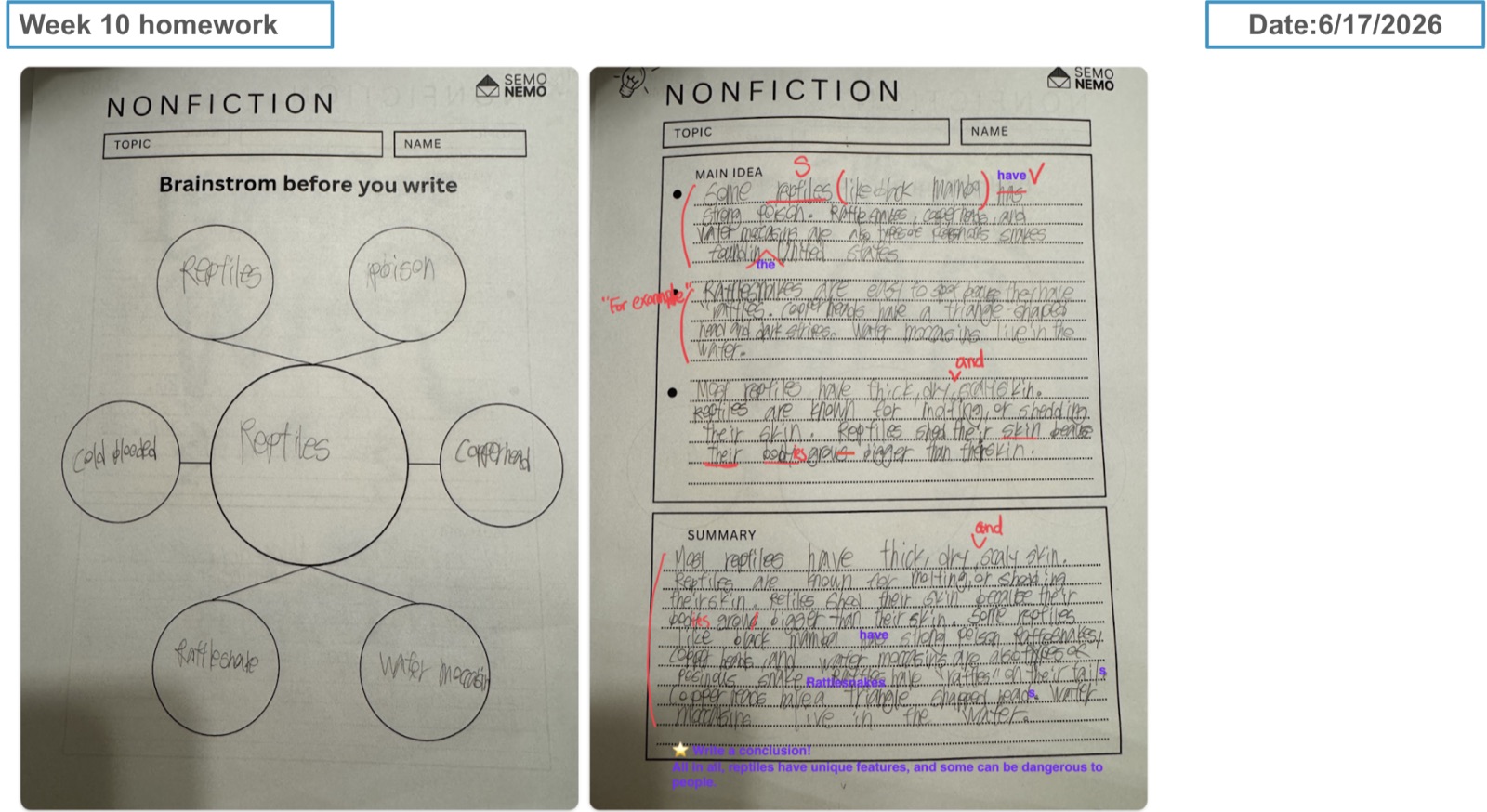
- Brainstorming & summary writing worksheets
- Topic-based presentation slides (PPT) & oral presentations
Tuition
- $230 per 4 sessions
How a Reading Class Flows
01 Predict the story from the book's illustrations and express opinions clearly in English
02 Analyze the author and characters to grasp the author's intent and the overall flow of the story
03 Analyze the social and historical background to understand the story deeply and expand thinking
04 Build vocabulary, reading, writing and speaking at the same time through open-ended questions and related activities
05 Discussion activities that identify the moral lesson and let students express their own ideas freely in English
Class Components
Through this step-by-step reading flow, students go beyond simply reading — they expand their thinking, express themselves more logically, and grow into fluent English speakers.
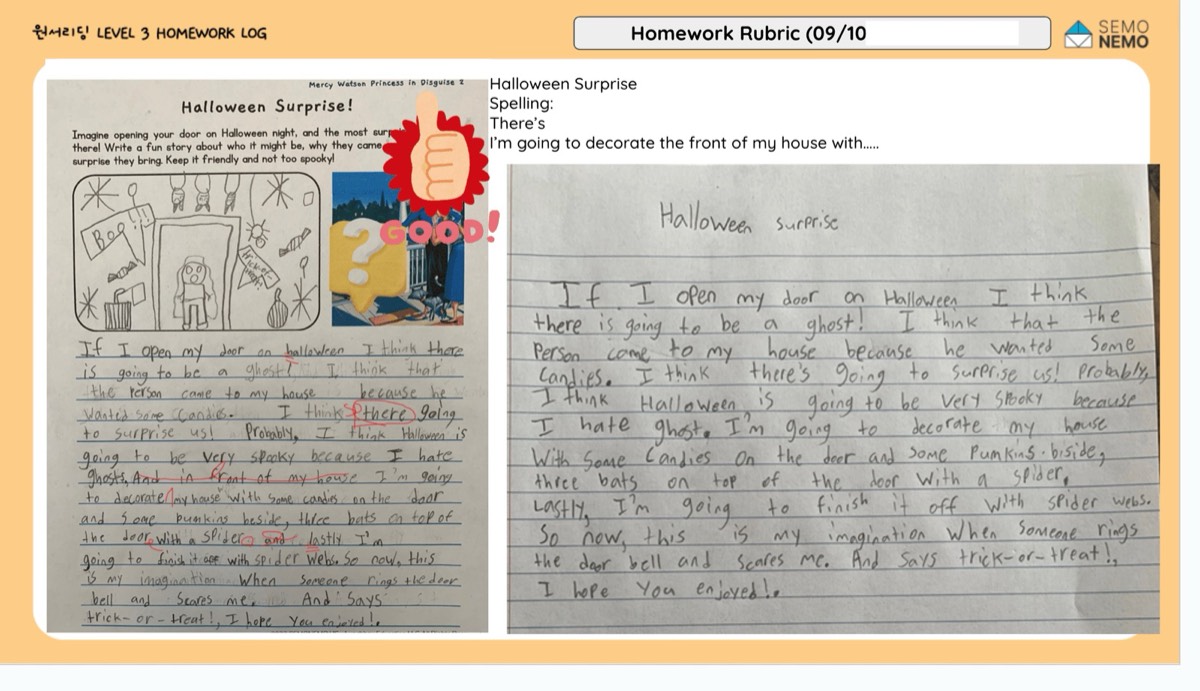
Homework
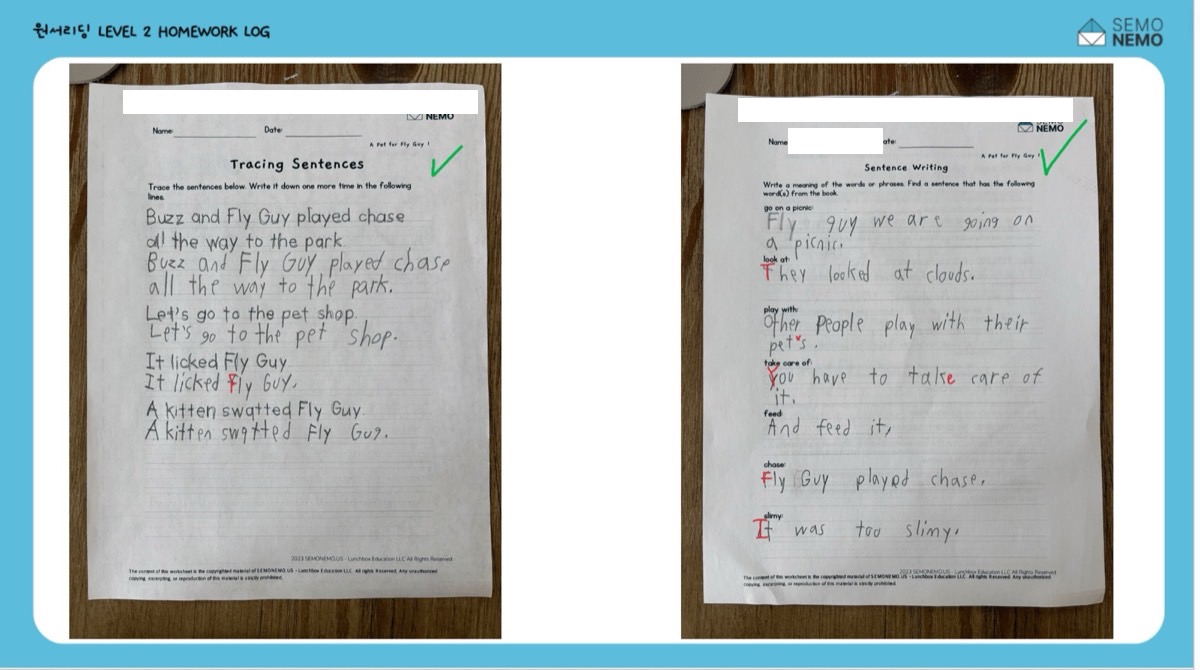
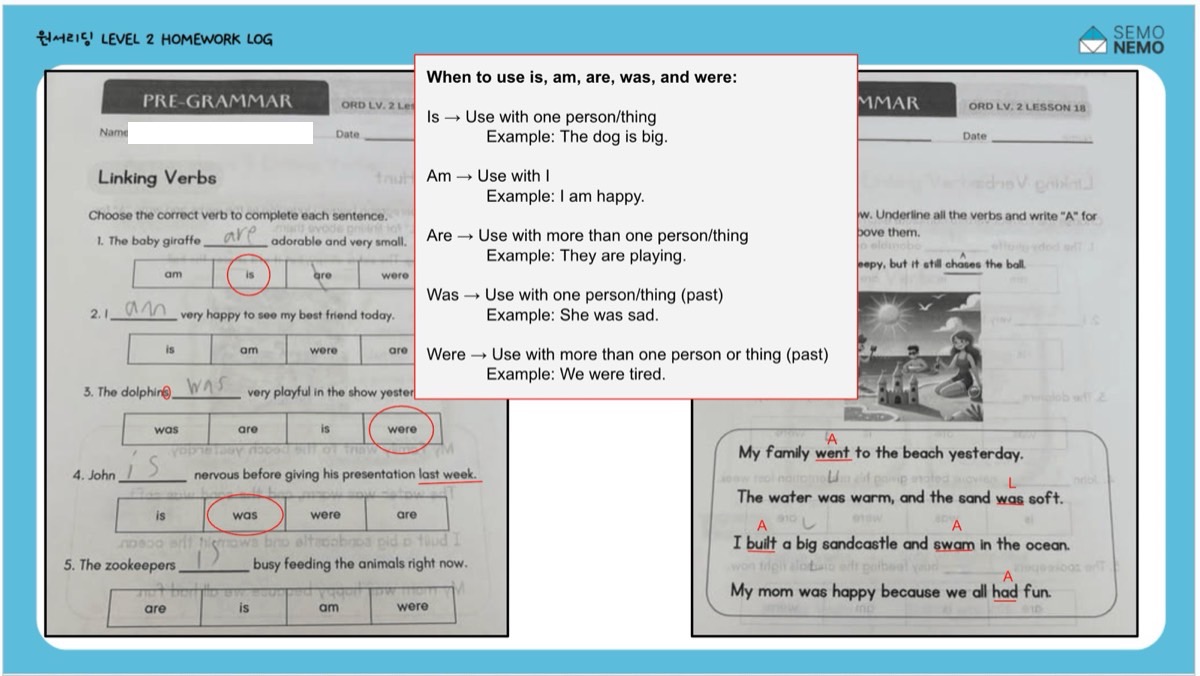
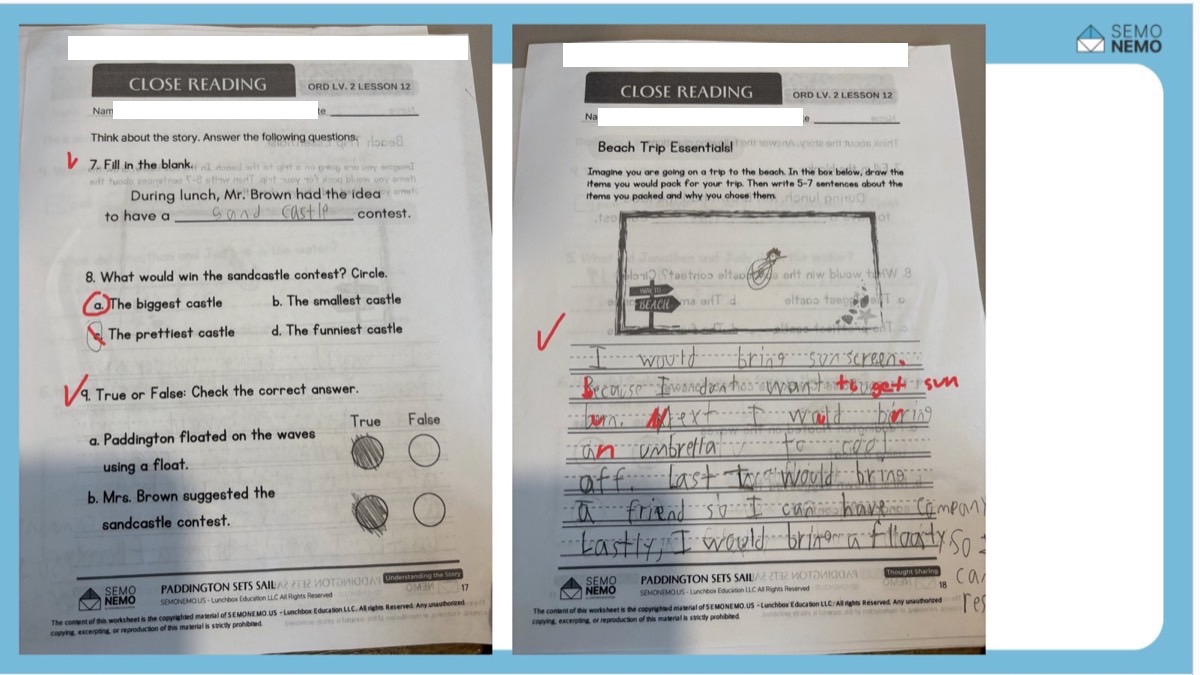
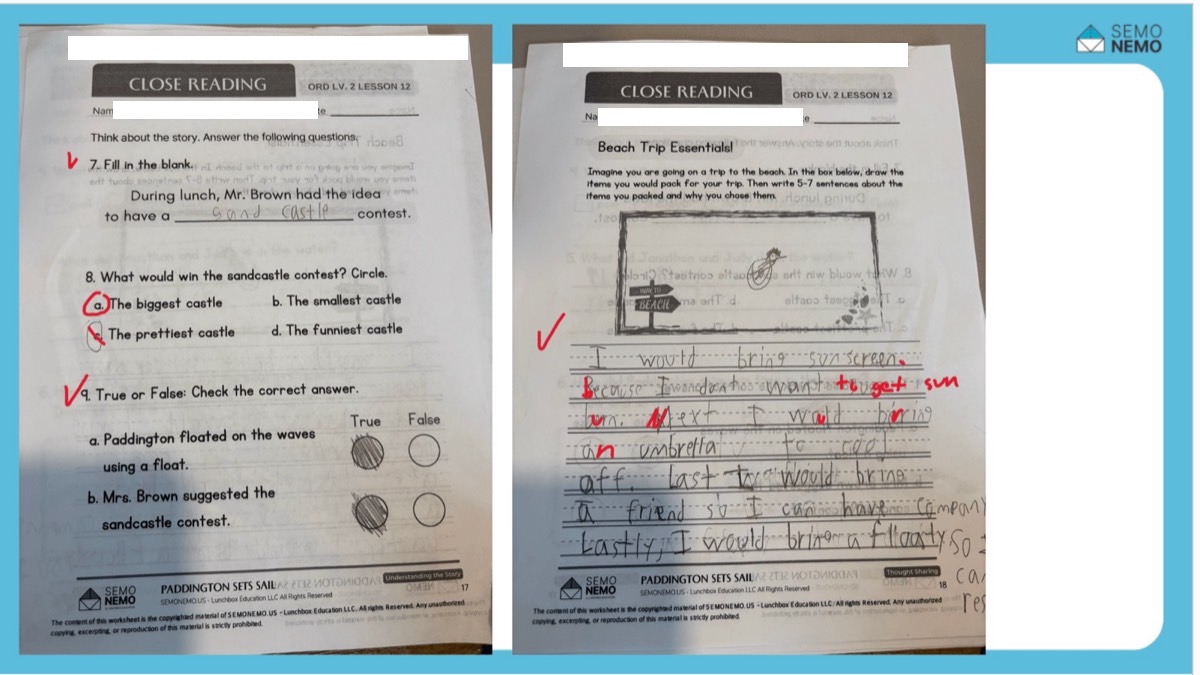
Building a reading habit and writing practice that expands thinking
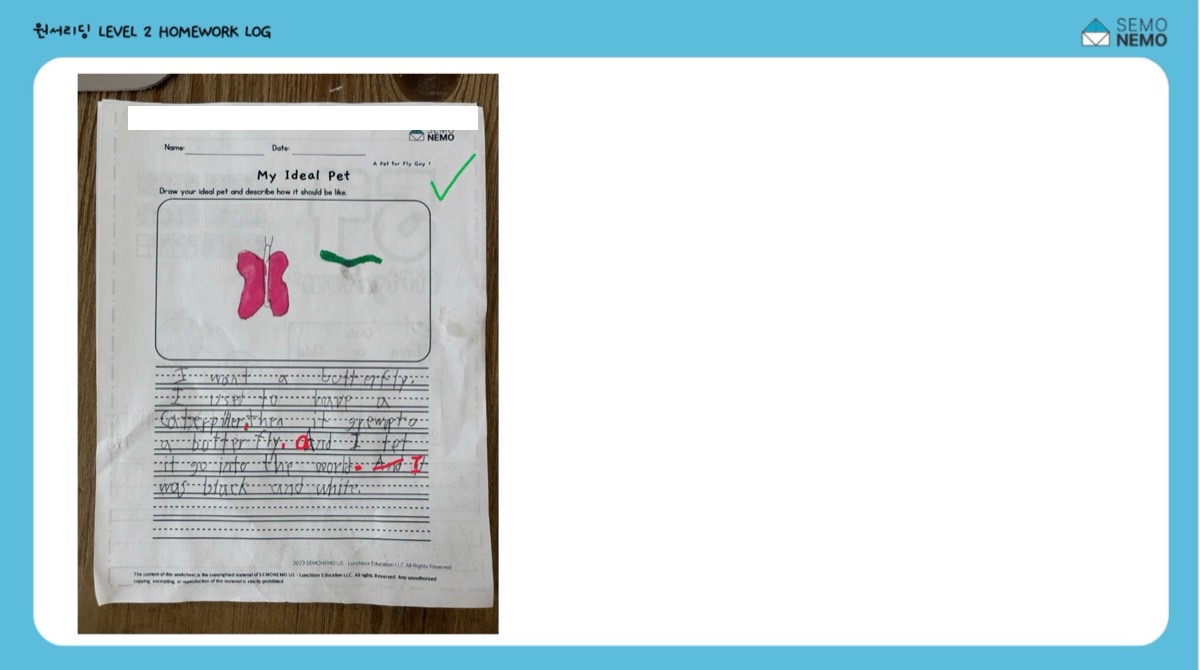
- Forming a habit of reading books regularly for natural, steady exposure to English
- Organizing key ideas from the reading and practicing putting their own thoughts into writing
- Reading logs and summaries that strengthen comprehension and sentence building
In Class
Analyzing and summarizing the book, then speaking about ideas and opinions logically
- Close reading that grasps the key content of the book and analyzes context
- Group activities and discussions to organize and voice opinions logically
- Summarizing and presenting key scenes and events, and explaining opinions with evidence
Special Class
Shadowing for speaking fluency and intonation, and internalizing sentence structure through core sentences
- A book-based shadowing program to train accurate pronunciation, intonation and rhythm
- Repeated practice of natural sentence patterns to absorb sentence structure
- Conversation practice to learn everyday expressions and speak fluently
Level Details — Lv.1
Stage: Beginner
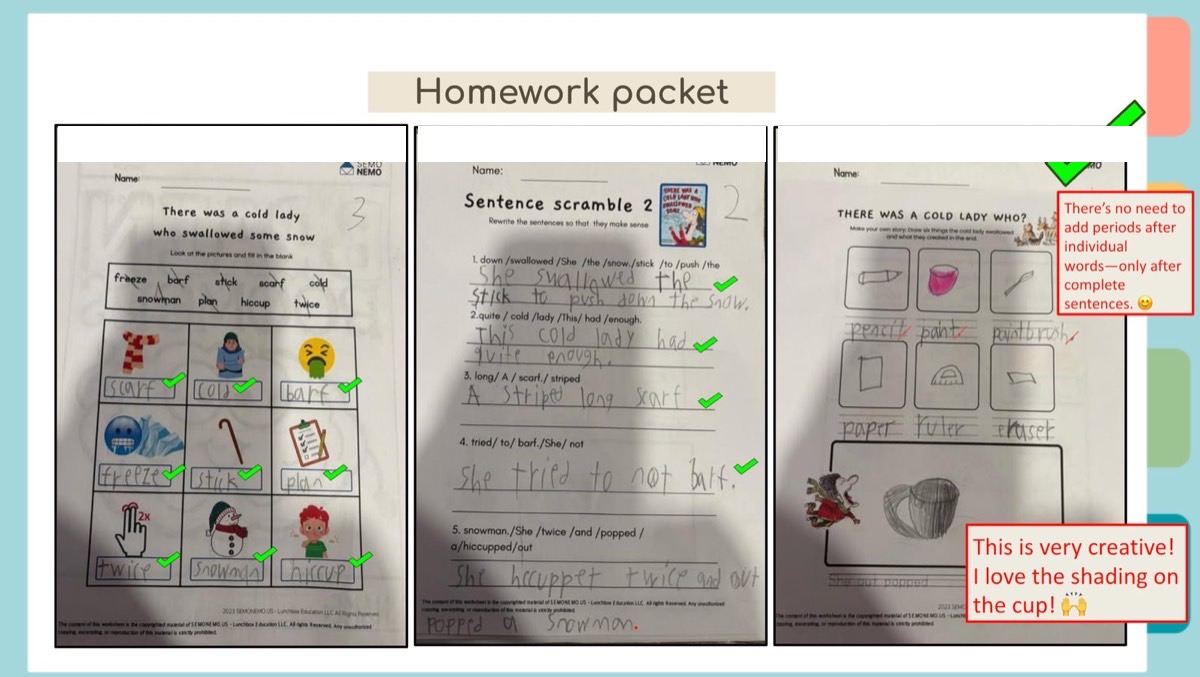
For students who have finished phonics and are moving into early reading. Students learn sentence structure and words and build basic reading skills.
US Kindergarten to early Grade 1
Recommended English level
level 1.5–2.2
Books
50 minutes · 48 sessions
Class
A good fit if your child…
Reading
- Understands phonics and can read CVC words (cat, dog), but finds reading sentences hard
Speaking
- Can say simple sentences like "I like cats." but has trouble making them longer
Writing
- Has difficulty putting together 2–3 sentences
What students learn
Reading
- Build reading fluency with repetitive-pattern books and shadow reading
Writing
- Learn words and sentence structure through copying and sentence building
Speaking
- Practice talking about pictures and answering simple questions
Phonics Review
- Review phonics through homework to strengthen spelling
The change we aim for
Reading
- Before: Struggles to read a short paragraph
- After: Reads sentences smoothly and understands what a paragraph means
Writing
- Before: Writes only single words like "cat" and "dog"
- After: Writes several connected sentences like "The cat is big."
Speaking
- Before: "Dog run."
- After: "The dog is running."
Level Details — Lv.2 · 2W
Stage: Intermediate
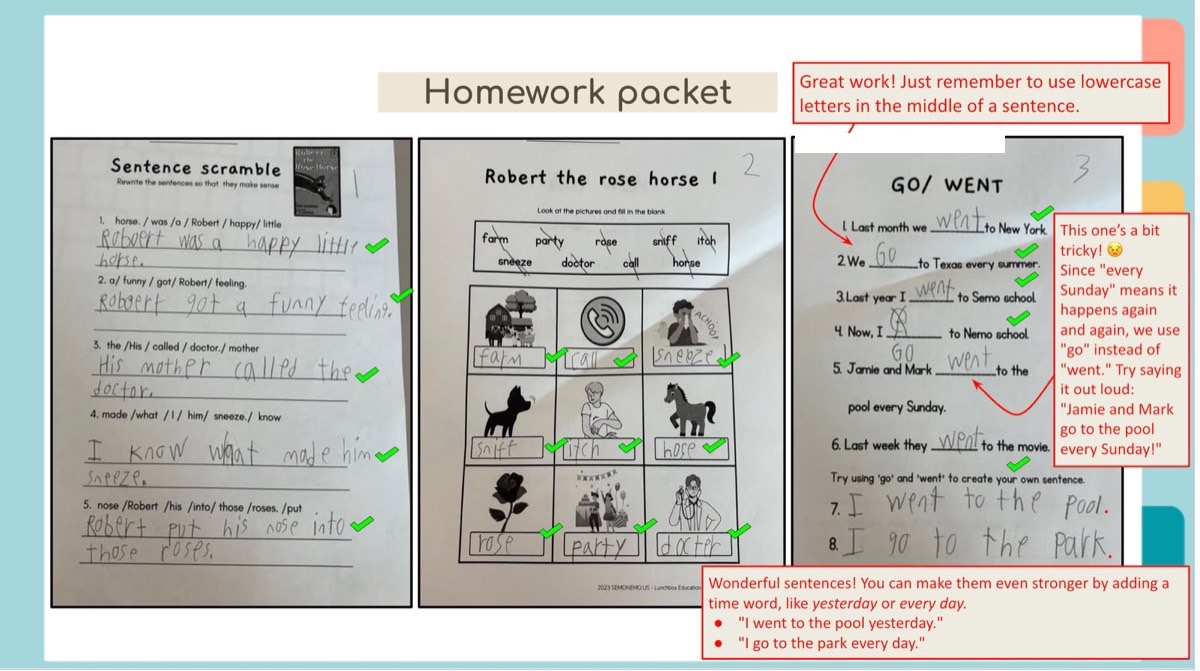
For students who can read sentences and are ready to understand stories more deeply and begin expressing their ideas in more detail.
late Grade 1 to early Grade 2 (US)
Recommended English level
level 2.5–3.0
Books
60 minutes · 48 sessions
Class
A good fit if your child…
Reading
- Reads and understands short sentences and simple paragraphs
Speaking
- Answers questions briefly with simple sentences
Writing
- Can write sentences but finds it hard to write longer pieces
What students learn
Reading
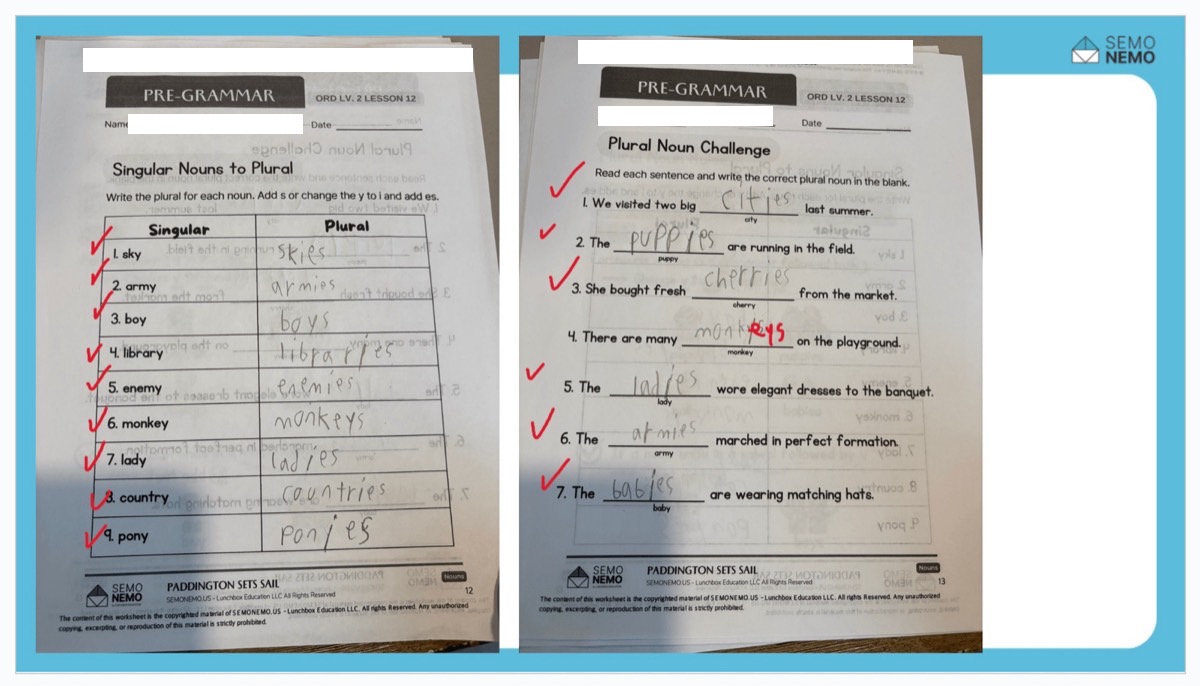
- Find the main idea of a story and summarize it in a reading log
Writing
- Connect several sentences into a paragraph about ideas and the plot
Speaking
- Give opinions with reasons, such as "I like this book because..."
The change we aim for
Reading
- Before: Understands only simple sentences like "The dog runs."
- After: Also understands sentences like "The dog runs to the park because it wants to play."
Writing
- Before: "I like the book."
- After: "I like the book because it is funny."
Speaking
- Before: "I like the dog."
- After: "I like the dog because it is cute and friendly."
Level Details — Lv.3
Stage: Advanced
Students analyze story details and draw on background knowledge to speak and write about their ideas logically.
late Grade 2 to early Grade 3 (US)
Recommended English level
level 3.0–3.8
Books
60 minutes · 48 sessions
Class
A good fit if your child…
Reading
- Understands story details and can predict what happens next
Speaking
- Answers questions in 2–3 or more sentences and shares short opinions
Writing
- Can build sentences and paragraphs with newly learned vocabulary
What students learn
Reading
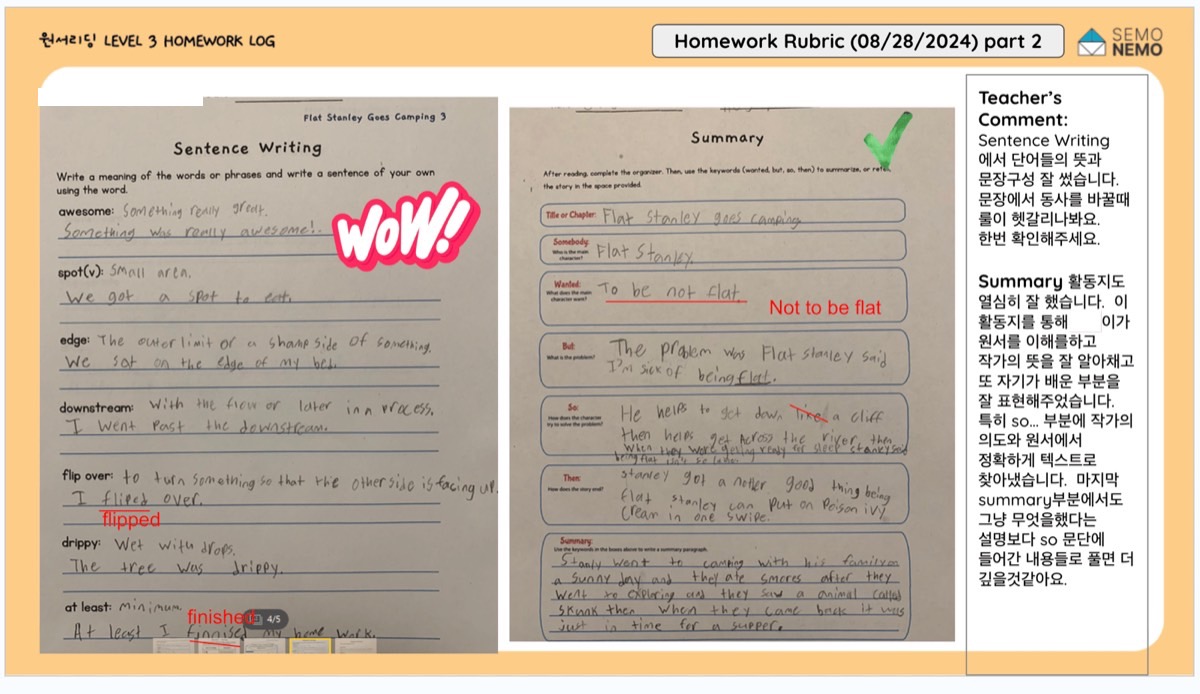
- Distinguish main ideas from details and analyze characters' traits and actions
Writing
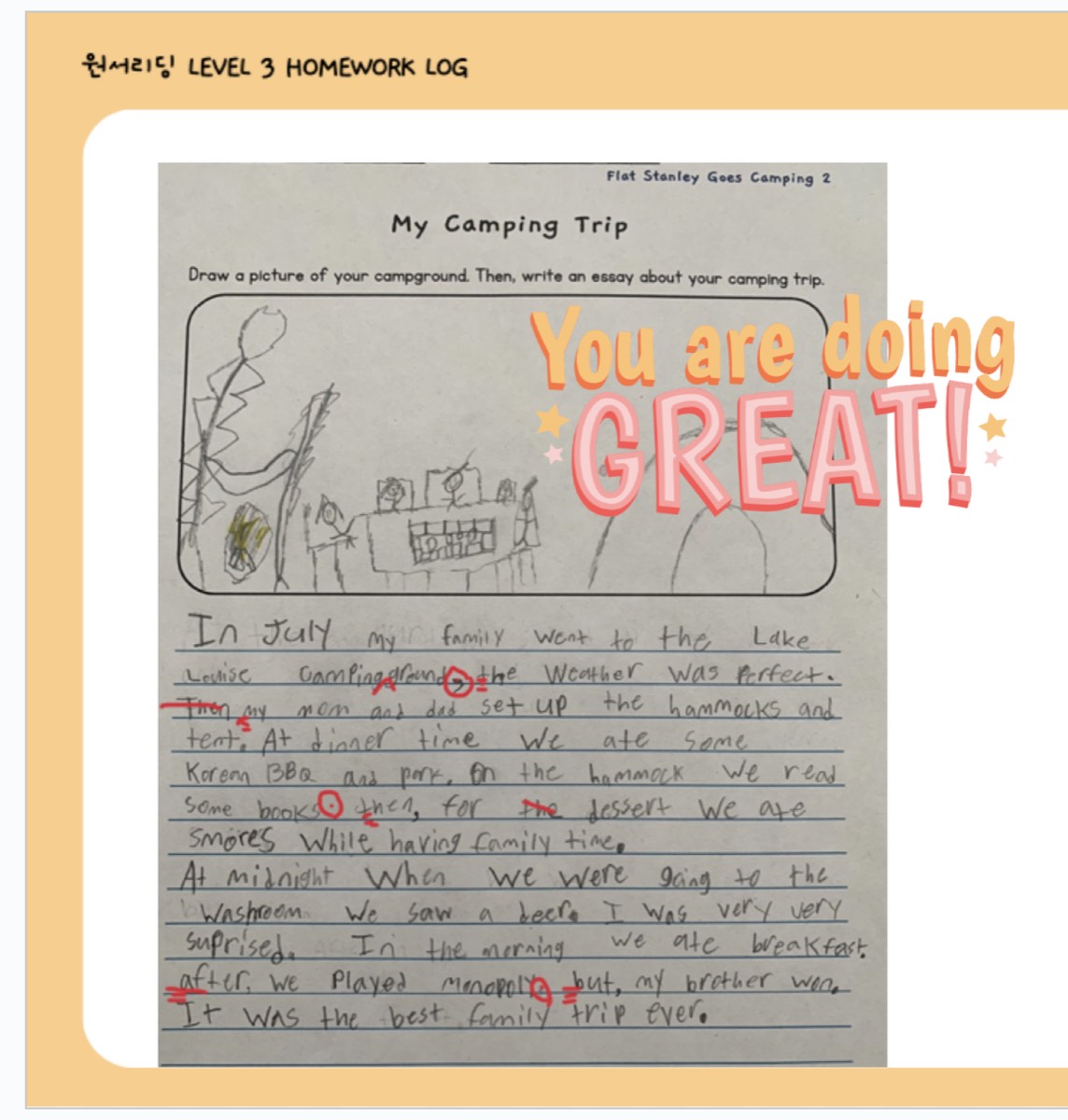
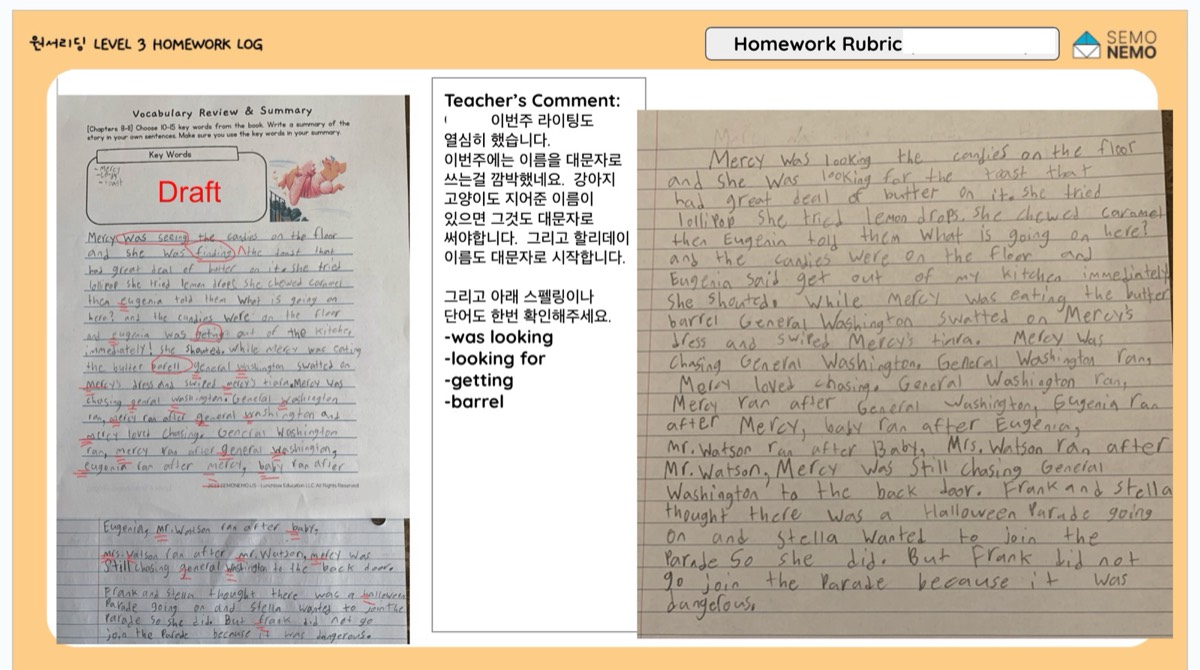
- Organize opinions with evidence into writing of two or more paragraphs
Speaking
- Discuss by connecting background knowledge and experience, and agree or disagree with others
The change we aim for
Reading
- Before: "The cat is running."
- After: "The cat is running because it is being chased by a dog. The story suggests that the cat is frightened and trying to escape."
Writing
- Before: "I like the book."
- After: "I like the book because it teaches an important lesson about friendship. The main character learns that honesty is the key to keeping good friends."
Speaking
- Before: "I like the dog."
- After: "I like the dog because it is brave and loyal. In the story, the dog saves its owner by warning them of a fire."
Level Details — Lv.4
Stage: Advanced · Nonfiction
Students read in-depth nonfiction texts covering Science and Geography, expanding their academic background knowledge while developing structured writing and oral presentation skills.
late Grade 3 to Grade 4+ (US)
Recommended English level
level 3.8–4.8+
Books
60 minutes · 20 sessions
Class
A good fit if your child…
Reading
- Reads chapter books or fictional stories comfortably, but struggles with informational nonfiction passages and advanced academic vocabulary
Writing
- Can write everyday journal entries or personal responses, but finds it challenging to extract key facts and organize them into cohesive academic summaries
Speaking
- Expresses personal thoughts and opinions, but needs practice structuring knowledge to present and discuss topics before an audience
What students learn
Reading
- Structurally analyze and summarize in-depth nonfiction topics, including the Solar System, Animal Classification, and World Geography
Fluency & Vocabulary
- Build advanced academic vocabulary and idioms through thematic Times for Kids article shadowing and recording assignments
Writing
- Organize factual information using brainstorming strategies to produce cohesive academic summary paragraphs
Presentation
- Create topic summaries on presentation slides (PPT) to deliver oral presentations and take part in peer evaluations
The change we aim for
Reading
- Before: Understands simple, isolated facts (e.g., "Jupiter is a very big planet.")
- After: Comprehends complex, detailed nonfiction information (e.g., "Jupiter is a gas giant known for severe storms such as the Great Red Spot, which has been raging for hundreds of years.")
Writing
- Before: Writes basic descriptions (e.g., "Whales are big mammals in the ocean.")
- After: Writes structured, evidence-based academic paragraphs (e.g., "Unlike fish, whales are warm-blooded mammals that breathe air through blowholes and give birth to live young, uniquely adapting to marine life.")
Speaking & Presentation
- Before: Shares brief statements (e.g., "I like studying about Europe.")
- After: Delivers structured, slide-supported oral presentations (e.g., "Today, I will present the geographical diversity of Europe, focusing on how the Alps influence regional climates and human settlement patterns.")
Parent reviews
“Thank you for always teaching my child with such care. After only a few classes, my child's reading has real structure, and the depth of their reading has changed.”
Translated from Korean
1:1 private classes available
Every class can also be taken as a private 1:1 class instead of a group class, with the schedule and pace set for your child.
How classes work
- Student page
- After enrolling, you'll get a link to your child's student page. Join class, find class materials, and watch past class recordings — all in one place. Bookmark it on your child's device.
- Homework
- Each class's teacher shares homework and feedback.
- Absences and make-ups
- Missed classes still count toward your enrolled classes. For group classes, your child can catch up with the recording. If something comes up, please let the teacher know in advance — the teacher may not count the class or may schedule a make-up.
- Refunds
- See section 5 (Refunds) of our Terms of Service.
Not sure where to start?
Through a level test and consultation, we'll find the right class and teacher for your child.
Book a Consultation